Report Summary
Custom Orthopaedic Shoes Market Size:
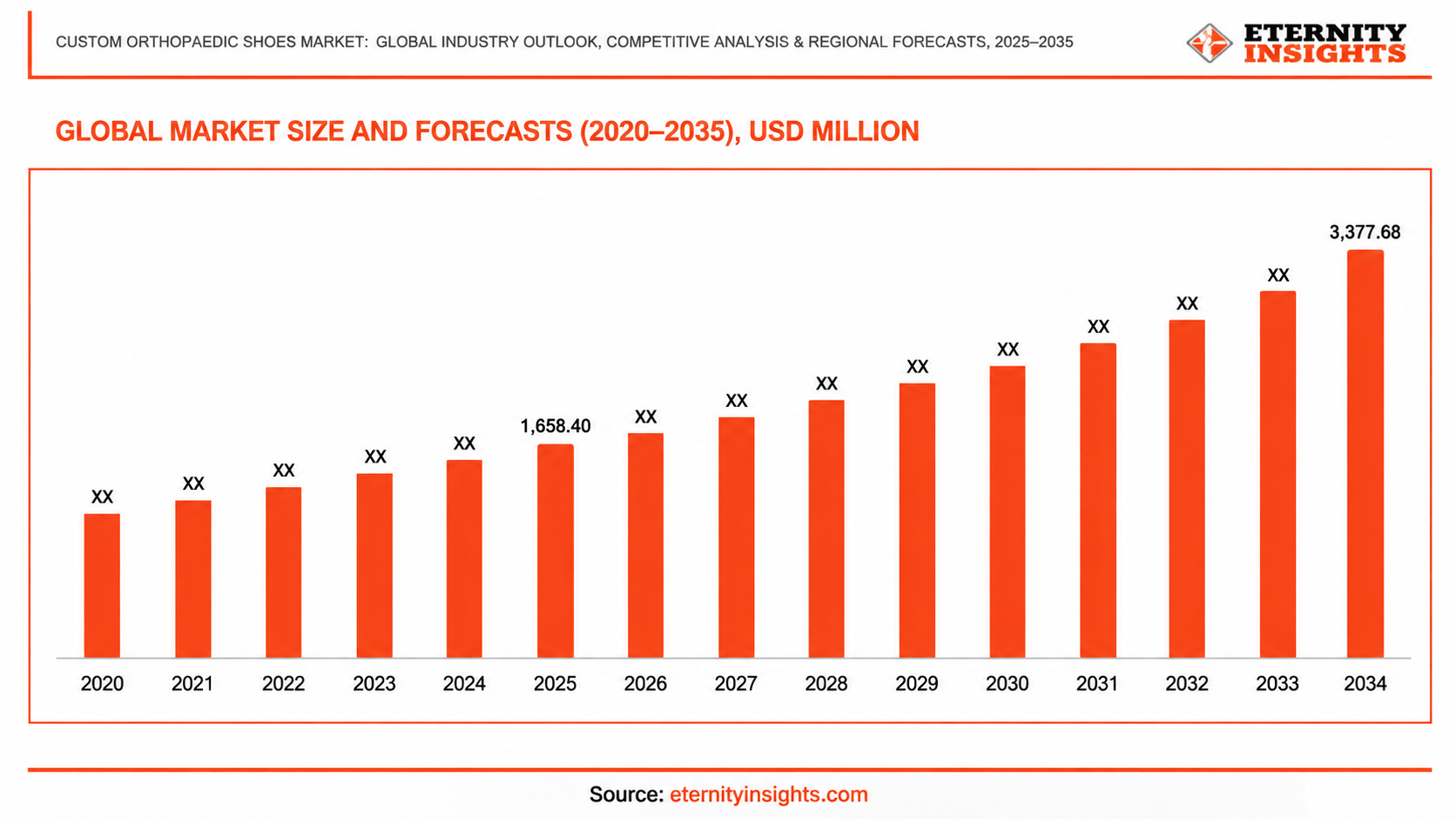
The global custom orthopaedic shoes market was valued at USD 1,658.40 million in 2025 and is projected to reach USD 3,377.68 million by 2034, expanding at a compound annual growth rate (CAGR) of 8.22% during the forecast period. Market growth is primarily driven by the increasing global burden of diabetes, musculoskeletal disorders, rheumatoid arthritis, and age-related mobility impairments, all of which significantly elevate the risk of foot complications requiring customized therapeutic solutions. The rapid expansion of the geriatric population worldwide, coupled with rising incidence of neuropathy, foot deformities, and chronic conditions necessitating pressure redistribution and biomechanical correction, is accelerating demand for prescription-based orthopaedic footwear across both developed and emerging healthcare systems.
The market is experiencing a transition from conventional medical footwear toward digitally customized and clinically prescribed solutions supported by advancements in 3D foot scanning, gait analysis, CAD/CAM design, and additive manufacturing technologies. These innovations enable precise anatomical customization, improved fit, and enhanced therapeutic effectiveness compared to standard prefabricated footwear. Healthcare providers and orthotic specialists are increasingly recommending individualized footwear solutions that integrate pressure mapping, structural correction, and orthotic compatibility to prevent ulceration, reduce pain, and improve long-term mobility outcomes, particularly among high-risk patient populations.
In terms of product adoption, everyday wear categories—including casual and athletic custom orthopaedic shoes—account for a substantial share of demand due to the need for continuous biomechanical support during daily activities. Safety and occupational footwear with medical modifications is gaining traction among working-age individuals requiring both protective and therapeutic functionality, particularly in industrial environments. Protective and offloading shoes designed for severe conditions such as diabetic foot ulcers and post-surgical recovery represent a critical segment within higher-complexity categories, reflecting the market’s strong clinical orientation.
From an application perspective, diabetes-related foot complications remain the dominant demand driver, followed by severe deformities, neuromuscular disorders, arthritis, trauma-related instability, and post-operative rehabilitation needs. Increasing emphasis on preventive care, early intervention, and mobility preservation is encouraging healthcare systems to incorporate custom orthopaedic footwear into long-term disease management protocols. Distribution is primarily driven through hospitals, prosthetics and orthotics (P&O) centers, certified pedorthic providers, and specialized orthopaedic clinics, while digital ordering platforms connected to clinical networks are emerging as complementary channels to enhance accessibility and patient reach.
Custom Orthopaedic Shoes Market Trends & Developments:
Rising Demand from Diabetes and Chronic Foot Disorders
The market is experiencing strong growth due to the increasing global prevalence of diabetes, arthritis, neuropathy, and severe foot deformities that require clinically customized footwear solutions. Patients with diabetic foot complications, in particular, need pressure-redistribution footwear to prevent ulcers and amputations, making therapeutic shoes an essential component of long-term care. The growing elderly population further amplifies demand, as aging is closely associated with mobility limitations and musculoskeletal conditions.
Shift Toward High-Complexity and Prescription-Based Footwear
A major structural trend is the transition from basic orthopaedic footwear toward mid-to-high complexity, prescription-driven solutions designed for severe clinical conditions. Healthcare providers increasingly prescribe customized footwear as part of disease management protocols rather than as optional comfort products. This shift is driven by the need for biomechanical correction, fall prevention, and long-term mobility restoration in patients with advanced deformities or post-surgical requirements.
Rapid Adoption of Digital Customization Technologies
Technological advancements such as 3D foot scanning, digital gait analysis, pressure mapping, CAD/CAM design, and additive manufacturing are transforming how custom orthopaedic shoes are designed and produced. These tools enable precise anatomical modeling, faster production cycles, and improved treatment outcomes compared to traditional casting methods. Digital customization also supports mass personalization, allowing clinics to deliver highly individualized solutions at scale.
Advancements in Materials and Lightweight Designs
Material innovation is improving both clinical performance and user comfort. Manufacturers are increasingly adopting advanced cushioning systems, breathable technical textiles, engineered synthetics, and composite materials to reduce weight while maintaining structural support. Enhanced moisture management, seamless interiors, and antimicrobial properties are particularly important for patients prone to skin breakdown and infections.
Emergence of Smart and Sensor-Enabled Footwear
Innovations in smart insoles and wearable sensor technologies are enabling real-time monitoring of pressure distribution, gait patterns, and patient activity levels. These systems can help clinicians detect early signs of complications and adjust treatment plans proactively. Integration of digital health technologies is expected to enhance preventive care and support remote patient monitoring, particularly for high-risk diabetic populations.
Increasing Focus on Preventive Care and Early Intervention
Healthcare systems are shifting from reactive treatment to preventive management of foot complications. Custom orthopaedic footwear is increasingly prescribed early in disease progression to avoid hospitalization, surgery, and long-term disability. This preventive approach is especially prominent in diabetic care programs and rehabilitation pathways, where footwear plays a critical role in maintaining mobility and independence.
Expansion of Clinical Collaboration and Integrated Care Models
Manufacturers are collaborating closely with podiatrists, orthotists, and rehabilitation specialists to develop clinically validated products tailored to patient needs. Such partnerships improve product effectiveness, ensure regulatory compliance, and strengthen credibility within the medical community. Integration of footwear solutions into multidisciplinary care pathways is becoming a key differentiator in the market.
Growth of Emerging Markets and Access to Care
While North America and Europe remain dominant due to advanced healthcare infrastructure, emerging economies are witnessing rapid adoption as access to podiatric services improves. Expanding healthcare investments, rising awareness, and increasing purchasing power in Asia-Pacific and other developing regions are creating new growth opportunities for specialized therapeutic footwear providers.
Custom Orthopaedic Shoes Market Competitive Landscape:
The global Custom Orthopaedic Shoes market analysis report covers detailed analysis of competitive scenario across globe. The report includes profiles of leading players covering below details.
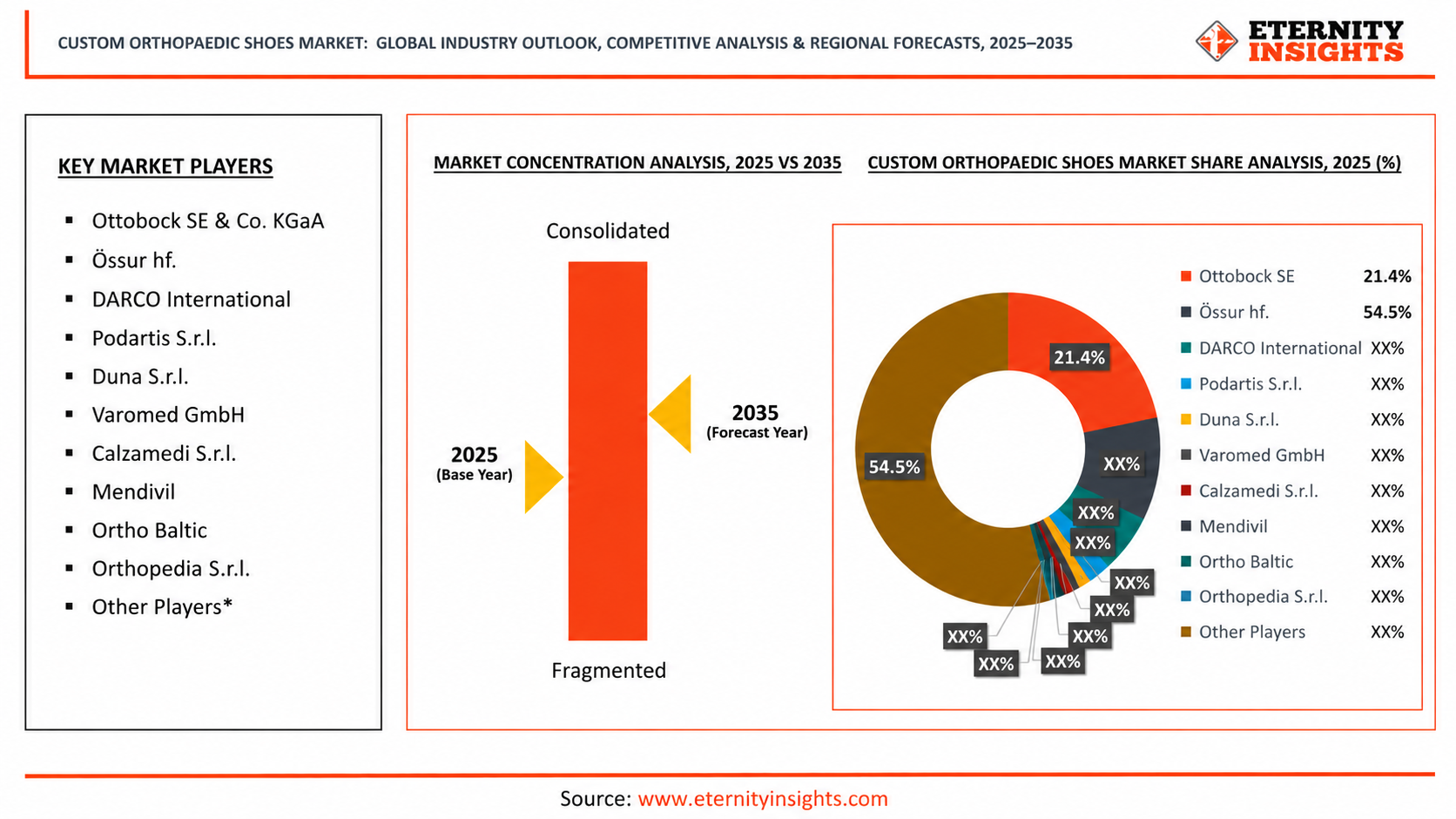
- Ottobock SE & Co. KGaA
- Össur hf.
- DARCO International
- Podartis S.r.l.
- Duna S.r.l.
- Varomed GmbH
- Calzamedi S.r.l.
- Mendivil
- Ortho Baltic
- Orthopedia S.r.l.
- Other Players
Custom Orthopaedic Shoes Market Analysis By Segmentation:
By Complexity Level:
- Mid-Complexity
- High-Complexity
- Ultra-Complex (Advanced/Surgical-Grade)
By Product Type:
- Casual/Everyday Orthopaedic Shoes
- Formal Orthopaedic Shoes
- Athletic/Sports Orthopaedic Shoes
- Safety/Occupational Orthopaedic Shoes
- Protective/Offloading Orthopaedic Shoes
By Material:
- Medical-Grade Leather
- Engineered Synthetics
- Technical Textiles/Fabric
- Multi-Material Designs
- Others
By Indication:
- Diabetic Foot (High-Risk)
- Severe Foot Deformities
- Neuromuscular Disorders
- Post-Surgical Rehabilitation
- Rheumatoid Arthritis (Advanced)
- Limb Length Discrepancy
- Sports-Related
- Biomechanical Conditions
- Trauma & Structural Instability
- Others
By Distribution Channel:
- Hospitals & Clinics
- Prosthetics & Orthotics (P&O) Centers
- Certified Pedorthic Providers
- Specialized Orthopaedic Providers
Custom Orthopaedic Shoes Market Key Trends & Insights:
By Complexity Level
- Mid-complexity footwear currently represents the largest segment, valued at USD 762.83 million in 2025 and projected to reach USD 1,424.90 million by 2034, growing at a CAGR of 7.19%. This segment’s dominance is attributed to its broad applicability across patients with moderate deformities, diabetic risk without severe complications, arthritis, and biomechanical abnormalities requiring structured support but not surgical-grade intervention.
- The high-complexity segment is expected to witness the fastest growth, expanding from USD 592.19 million in 2025 to USD 1,307.78 million by 2034, at a CAGR of 9.20%, outperforming the overall market growth rate. This acceleration reflects rising prevalence of severe deformities, Charcot foot, advanced diabetic complications, neuromuscular disorders, and post-trauma instability requiring highly customized structural correction. Increasing adoption of precision technologies such as 3D scanning, CAD/CAM fabrication, and biomechanical gait analysis is enabling clinicians to prescribe more sophisticated footwear solutions, thereby expanding the addressable patient base for high-complexity products.
- The ultra-complex (advanced/surgical-grade) segment represents the most clinically intensive category, projected to grow from USD 297.76 million in 2025 to USD 632.69 million by 2034, registering a CAGR of 8.74%. These solutions are typically prescribed for patients with severe deformities, limb length discrepancies, post-surgical reconstruction, or conditions requiring extensive offloading and structural stabilization. The growth in this segment is driven by increasing survival rates after complex surgeries, rising incidence of advanced diabetic foot complications, and expanding rehabilitation services.
By Product Type
- Casual/Everyday orthopaedic shoes represent one of the largest segments, valued at USD 495.29 million in 2025 and projected to reach USD 889.13 million by 2034, growing at a CAGR of 6.72%. This segment’s strong position is driven by continuous daily usage among patients requiring moderate support for conditions such as diabetes risk, arthritis, and biomechanical imbalances. These shoes offer a balance between therapeutic functionality and comfort, making them the most widely prescribed option for long-term wear across adult and geriatric populations.
- Protective/Offloading orthopaedic shoes are emerging as the fastest-growing segment, expected to expand from USD 458.93 million in 2025 to USD 1,044.27 million by 2034, registering a CAGR of 9.57%, the highest among all product types. The growth is fueled by the rising prevalence of diabetic foot ulcers, post-surgical recovery needs, and severe deformities requiring targeted pressure redistribution and wound protection.
- The safety/occupational orthopaedic footwear segment is also experiencing strong growth, projected to rise from USD 199.89 million in 2025 to USD 443.56 million by 2034, at a CAGR of 9.26%. Demand is driven by working-age individuals with foot disorders who require protective footwear compliant with workplace safety standards while maintaining therapeutic benefits. Industrial sectors, construction, and manufacturing environments are increasingly accommodating medically modified safety footwear to support workforce mobility and reduce injury risks.
By Material
- Medical-grade leather remains the dominant material segment, valued at USD 755.21 million in 2025 and projected to reach USD 1,401.00 million by 2034, growing at a CAGR of 7.11%. Its widespread adoption is attributed to superior durability, breathability, moldability to foot shape, and ability to accommodate structural modifications required in mid- to high-complexity footwear. Leather continues to be preferred for its balance of comfort and support, particularly for long-term daily use among geriatric and diabetic patients.
- Multi-material designs represent another significant segment, expected to expand from USD 328.59 million in 2025 to USD 708.41 million by 2034, at a CAGR of 8.91%. These designs combine leather, synthetics, cushioning foams, and reinforcement components to achieve optimal performance characteristics, including flexibility, shock absorption, pressure redistribution, and structural stability. The growing complexity of patient needs and the demand for highly customized solutions are driving manufacturers to adopt hybrid construction approaches that can address multiple biomechanical requirements simultaneously.
- Moreover, the technical textiles and fabric-based materials are emerging as the fastest-growing category, projected to increase from USD 206.51 million in 2025 to USD 496.73 million by 2034, registering a CAGR of 10.24%, the highest among all material segments. Growth is driven by advancements in lightweight, breathable, antimicrobial, and stretchable fabrics that enhance comfort and reduce skin irritation, particularly for diabetic and neuropathic patients.
By Indication
- Diabetic foot (high-risk) represents the largest and fastest-growing segment, valued at USD 505.94 million in 2025 and projected to reach USD 1,105.86 million by 2034, expanding at a CAGR of 9.08%. The dominance of this segment reflects the escalating global prevalence of diabetes and associated complications such as neuropathy, ulceration risk, and poor circulation. Custom orthopaedic footwear plays a critical role in pressure redistribution, wound prevention, and amputation risk reduction, making it a cornerstone of diabetic foot management programs worldwide.
- Post-surgical rehabilitation is another high-growth segment, expected to increase from USD 234.69 million in 2025 to USD 494.04 million by 2034, at a CAGR of 8.62%. Rising volumes of reconstructive surgeries, joint procedures, and trauma interventions are driving demand for customized footwear designed to stabilize gait, protect healing tissues, and restore functional mobility. Similarly, sports-related biomechanical conditions are projected to grow at a robust CAGR of 8.94%, reflecting increasing awareness of injury prevention and rehabilitation among physically active populations.
- Segments addressing structural abnormalities, including severe foot deformities, neuromuscular disorders, and trauma & structural instability, continue to represent substantial demand due to the need for long-term corrective support. Severe deformities alone are expected to grow from USD 273.76 million to USD 517.59 million by 2034, while neuromuscular conditions and trauma-related cases maintain steady growth as patients require stabilization, alignment correction, and fall-risk reduction. Limb length discrepancy, projected to grow at a CAGR of 8.01%, highlights the importance of customized solutions incorporating elevation adjustments and gait balancing features.
By Distribution Channel
- Hospitals & clinics account for the largest share of the market, valued at USD 675.94 million in 2025 and projected to reach USD 1,319.90 million by 2034, growing at a CAGR of 7.72%. Their leadership position is driven by their role as primary diagnosis and treatment centers for patients with diabetes-related complications, severe deformities, trauma, and post-surgical rehabilitation needs.
- Prosthetics & Orthotics centers represent the second-largest and one of the fastest-growing channels, expected to expand from USD 585.95 million in 2025 to USD 1,238.79 million by 2034, at a CAGR of 8.67%. These centers specialize in biomechanical assessment, custom fabrication, and integration of orthotic components, positioning them as critical hubs for advanced therapeutic footwear solutions. Increasing adoption of digital technologies such as 3D scanning, CAD/CAM design, and additive manufacturing is enhancing production efficiency and precision, further strengthening the role of P&O centers in delivering mid- to ultra-complex footwear.
- Certified pedorthic providers are projected to witness the fastest growth, rising from USD 277.46 million in 2025 to USD 603.75 million by 2034, registering a CAGR of 9.02%. Their expansion is driven by growing demand for outpatient care, long-term management of chronic conditions, and accessibility for patients requiring moderate customization without hospitalization. Pedorthic providers play a crucial role in preventive care, footwear modification, and follow-up services, particularly for diabetic patients and elderly populations, making them an increasingly important distribution channel in community-based healthcare settings.
Custom Orthopaedic Shoes Market By Regional Analysis
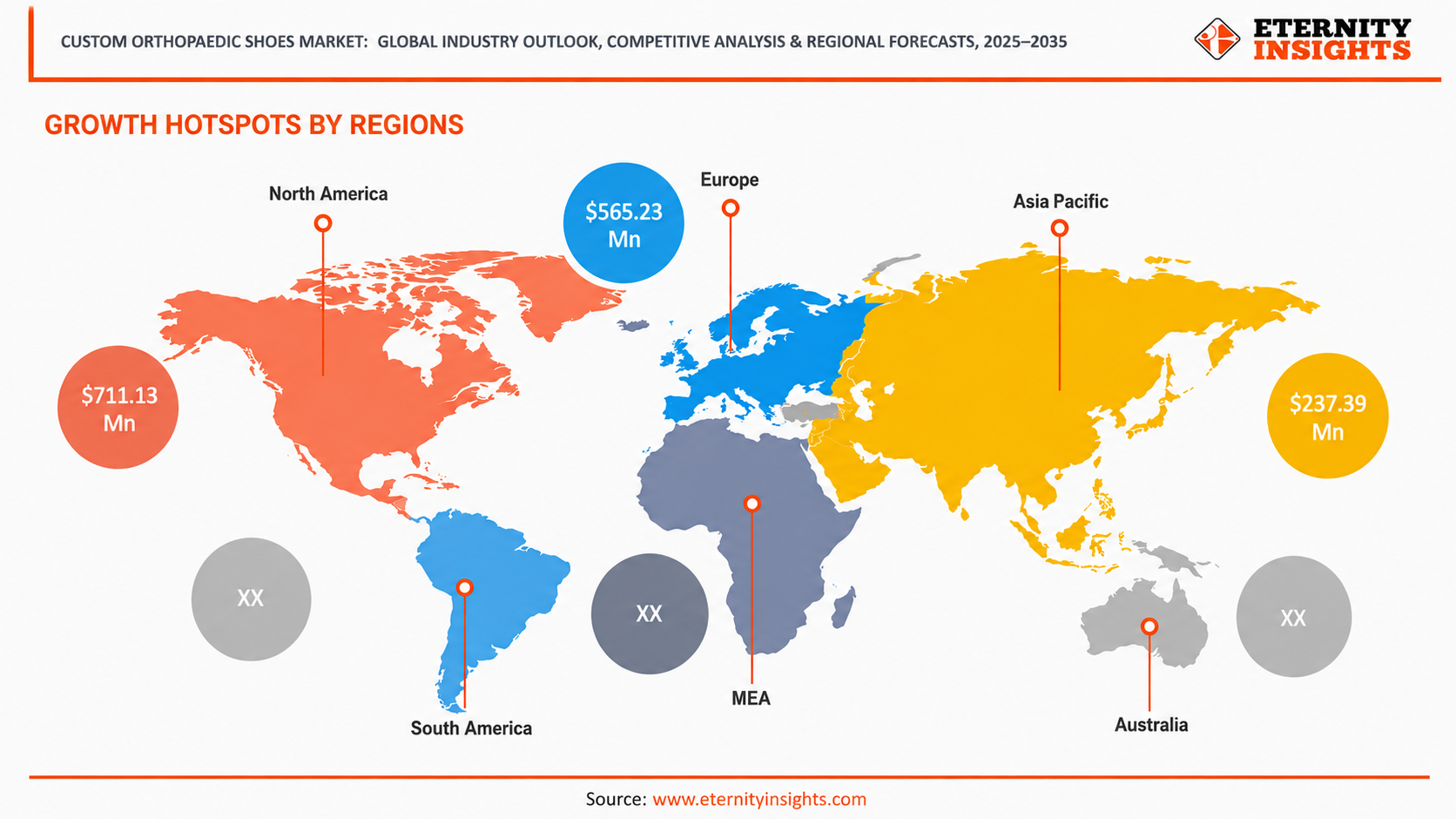
- North America holds the largest market share, valued at USD 711.13 million in 2025 and projected to reach USD 1,424.37 million by 2034, growing at a CAGR of 8.02%. The region’s dominance is driven by a high prevalence of diabetes and obesity, advanced healthcare systems, strong reimbursement support for therapeutic footwear, and widespread awareness of preventive foot care. The presence of leading manufacturers, specialized orthotic service providers, and adoption of advanced customization technologies further reinforce North America’s leadership position.
- Europe represents the second-largest regional market, expected to expand from USD 565.23 million in 2025 to USD 1,118.69 million by 2034, at a CAGR of 7.88%. Growth is supported by aging populations, well-established healthcare infrastructure, and government-funded healthcare programs that cover orthopaedic and rehabilitative solutions. Countries such as Germany, the U.K., France, and Italy play a significant role due to strong clinical networks, availability of certified pedorthic providers, and increasing focus on mobility preservation among elderly populations.
- The Asia-Pacific region is projected to be the fastest-growing market, rising from USD 237.39 million in 2025 to USD 586.36 million by 2034, registering a CAGR of 10.57%, the highest globally. Rapid growth is attributed to expanding healthcare access, rising disposable incomes, increasing awareness of diabetic foot care, and a large patient population with untreated foot disorders. Emerging economies such as China and India, along with developed markets like Japan and South Korea, are witnessing increased adoption of customized orthopaedic solutions driven by urbanization and improving medical infrastructure.
- South America and the Middle East & Africa (MEA) represent smaller but steadily growing markets. South America is projected to grow from USD 79.53 million in 2025 to USD 130.38 million by 2034, at a CAGR of 5.65%, while MEA is expected to expand from USD 65.12 million to USD 117.88 million, at a CAGR of 6.82%. The growth in these regions is supported by gradual improvements in healthcare access, rising awareness of chronic disease management, and increasing investment in medical infrastructure.