Report Summary
Eternity Insights has published a new study on Global Automotive Biometric Identification Market focusing on key segments as by Type (Fingerprint Biometrics, Facial Recognition, Voice Recognition, Iris Recognition), by Application (Passenger Car, Commercial Vehicle, Two wheeler, Other), and by region. This deep dive re-search report highlights the market and competitive intelligence across the key segments of the mar-ket. The report also considers the impact of COVID-19 on the global Automotive Biometric Identification Market.
The report considers 2018-2020 as historic period, 2021 as base year, and 2022-2028 as forecast period. The report includes quantitative analysis of the market supported by the market drivers, challenges, and trends to accurately map the market scenario and competition. Moreover, key insights related to market having direct impact on the market will also be covered.
Automotive Biometric Identification Market report is based on robust research methodology designed using blend of research ap-proaches developed using secondary/desk research and validated through the primary research and expert insights. Eternity Insights also uses paid data bases such as FACIVA, Hoovers, and other bench-marking and forecasting tools to provide accurate statistical analysis of supply and demand trends.
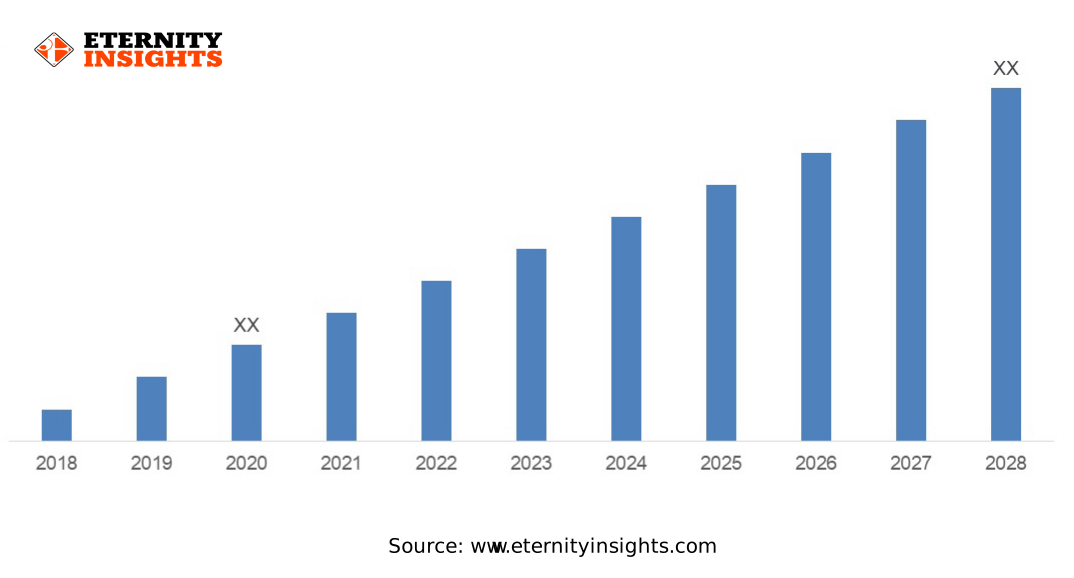
Global Automotive Biometric Identification Market Size, 2018-2028 (USD Million)
To learn more about this report
Global Automotive Biometric Identification Market Segmentation:
Automotive Biometric Identification Market, By Type
- Fingerprint Biometrics
- Facial Recognition
- Voice Recognition
- Iris Recognition
Automotive Biometric Identification Market, By Application
- Passenger Car
- Commercial Vehicle
- Two wheeler
- Other
To learn more about this report
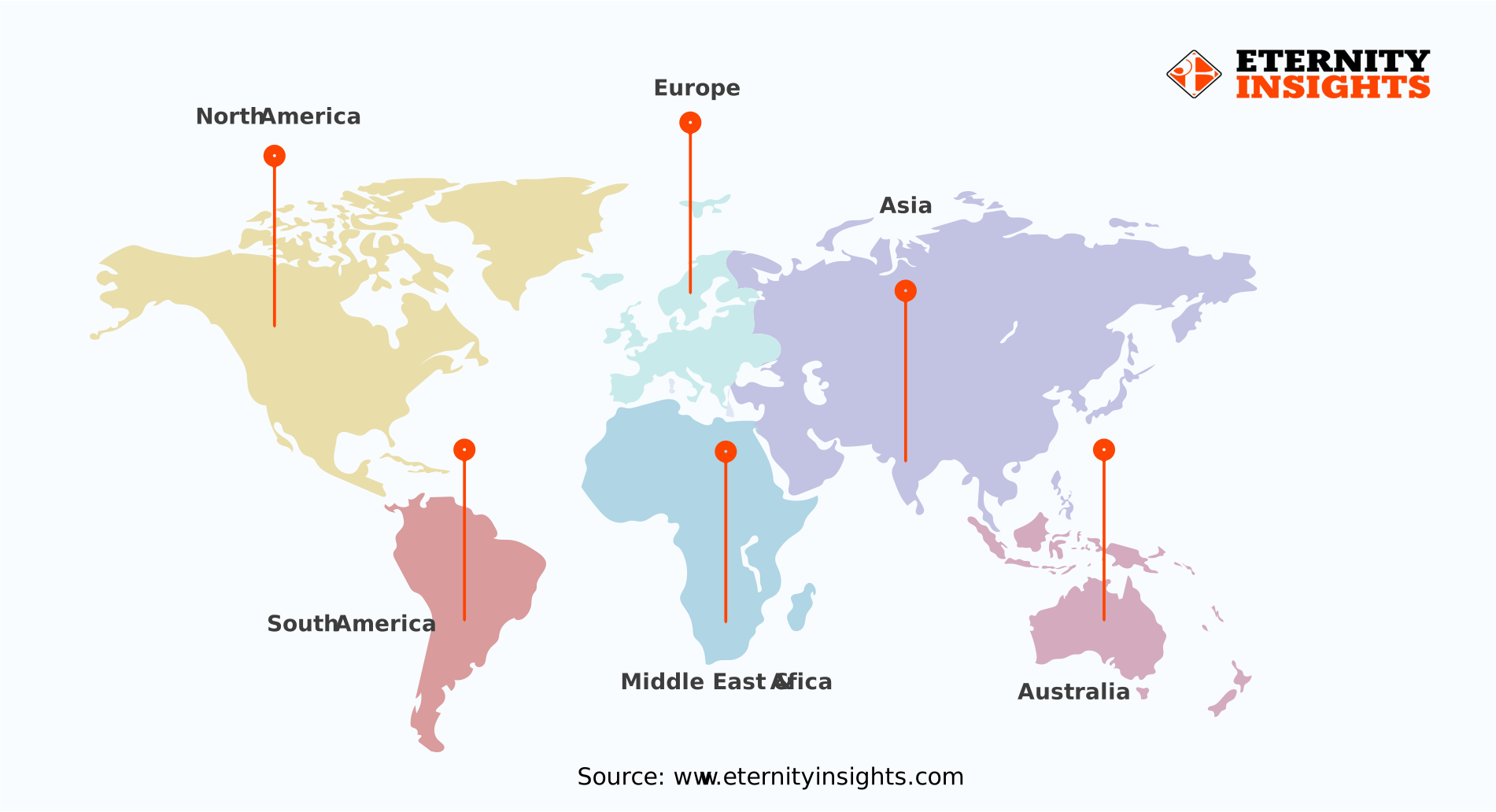
Geographically, the market is categorized in to five regions as North America, Europe, Asia Pacific, Latin America, and the Middle East and Africa. North America region dominates the global Automotive Biometric Identification market in terms of demand generation. The Automotive Biometric Identification market in Asia Pacific region is expected to grow at significantly high growth rate. The regional market is further sub-segmented and analyzed at granular level across key countries. The report will include market size and forecast for Automotive Biometric Identification market for below listed coun-tries across each region.
North America (U.S. and Canada), Europe (Germany, France, Italy, UK, Spain, and Rest of Europe), Asia Pacific (China, India, Japan, Australia, and Rest of Asia Pacific region); Latin America (Brazil, Mexico, and rest of the Latin America); Middle East and Africa (GCC, South Africa, and Rest of the Middle East and Africa).
Global Automotive Biometric Identification Market Taxonomy:

To learn more about this report
Global Automotive Biometric Identification Market Competitive Landscape
The global Automotive Biometric Identification market analysis report covers detailed analysis of competitive scenario across globe. The report includes profiles of leading players covering below details
- Company Overview
- Financial Analysis
- Product Portfolio Analysis
- Strategic Overview
- SWOT Analysis
List of Companies Profiled in the report:
- Continental
- Bosch
- Valeo
- Voicebox Technologies
- Hitachi
- FUJITSU
- Synaptics
- Methode 23
- Hid-Global
- VOXX International
- Denso
- Other Players of Specific Interest can be added based on requirement
Market Segmentation
| Report Attributes |
Details |
| The market size value in 2021 |
USD XX.XX Million |
| CAGR (2021 - 2028) |
XX.XX % |
| The Revenue forecast in 2028 |
USD XX.XX Million |
| Base year for estimation |
2021 |
| Historical data |
2018-2019 |
| Forecast period |
2022-2028 |
| Quantitative units |
- Revenue in USD Million
- CAGR from 2021 to 2028
|
| Report coverage |
Revenue forecast, company ranking, competitive landscape, growth factors, and trends |
| Segments covered |
By Type Outlook, Application Outlook, Regional Outlook |
| By Type Outlook |
Fingerprint Biometrics, Facial Recognition, Voice Recognition, Iris Recognition |
| By Application Outlook |
Passenger Car, Commercial Vehicle, Two wheeler, Other |
| Regional scope |
North America, Europe, Asia Pacific, Latin America, Middle East & Africa |
| Country scope |
U.S., Canada, U.K., Germany, France, BENELUX, China, India, Japan, South Korea, Brazil, Saudi Arabia, UAE, Turkey |
| Key companies profiled |
Continental, Bosch, Valeo, Voicebox Technologies, Hitachi, FUJITSU, Synaptics, Methode 23, Hid-Global, VOXX International, Denso |
| Customization Available |
Yes, the report can be tailored to meet your specific requirements. |
Key Benefits to the stake holders
- Qualitative and quantitative analysis of the market based on segmentation involving both economic as well as non-economic factors
- Provision of market value (USD Billion) and volume (Tons) data for each segment and sub-segment
- Indicates the region and segment that is expected to witness the fastest growth as well as to dominate the market
- Analysis by geography highlighting the consumption of the product/service in the region as well as indicating the factors that are affecting the market within each region
- Competitive landscape which incorporates the market ranking of the major players, along with new service/product launches, partnerships, business expansions and acquisitions in the past five years of companies profiled
- Extensive company profiles comprising of company overview, company insights, product benchmarking and SWOT analysis for the major market players
- The current as well as the future market outlook of the industry with respect to recent developments (which involve growth opportunities and drivers as well as challenges and restraints of both emerging as well as developed regions
- Includes an in-depth analysis of the market of various perspectives through Porter’s five forces analysis
- Provides insight into the market through Value Chain
- Market dynamics scenario, along with growth opportunities of the market in the years to come
Table Of Contents
Table of Contents
1 Study Coverage
1.1 Automotive Biometric Identification Product
1.2 Key Market Segments in This Study
1.3 Key Manufacturers Covered
1.4 Market by Type
1.4.1 Global Automotive Biometric Identification Market Size Growth Rate by Type
1.4.2 Fingerprint Biometrics
1.4.3 Facial Recognition
1.4.4 Voice Recognition
1.4.5 Iris Recognition
1.5 Market by Application
1.5.1 Global Automotive Biometric Identification Market Size Growth Rate by Application
1.5.2 Passenger Car
1.5.3 Commercial Vehicle
1.5.4 Two wheeler
1.6 Study Objectives
1.7 Years Considered
2 Executive Summary
2.1 Global Automotive Biometric Identification Market Size
2.1.1 Global Automotive Biometric Identification Revenue 2014-2025
2.1.2 Global Automotive Biometric Identification Production 2014-2025
2.2 Automotive Biometric Identification Growth Rate (CAGR) 2021-2027
2.3 Analysis of Competitive Landscape
2.3.1 Manufacturers Market Concentration Ratio (CR5 and HHI)
2.3.2 Key Automotive Biometric Identification Manufacturers
2.3.2.1 Automotive Biometric Identification Manufacturing Base Distribution, Headquarters
2.3.2.2 Manufacturers Automotive Biometric Identification Product Offered
2.3.2.3 Date of Manufacturers Enter into Automotive Biometric Identification Market
2.4 Key Trends for Automotive Biometric Identification Markets & Products
3 Market Size by Manufacturers
3.1 Automotive Biometric Identification Production by Manufacturers
3.1.1 Automotive Biometric Identification Production by Manufacturers
3.1.2 Automotive Biometric Identification Production Market Share by Manufacturers
3.2 Automotive Biometric Identification Revenue by Manufacturers
3.2.1 Automotive Biometric Identification Revenue by Manufacturers (2017-2020)
3.2.2 Automotive Biometric Identification Revenue Share by Manufacturers (2017-2020)
3.3 Automotive Biometric Identification Price by Manufacturers
3.4 Mergers & Acquisitions, Expansion Plans
4 Automotive Biometric Identification Production by Regions
4.1 Global Automotive Biometric Identification Production by Regions
4.1.1 Global Automotive Biometric Identification Production Market Share by Regions
4.1.2 Global Automotive Biometric Identification Revenue Market Share by Regions
4.2 United States
4.2.1 United States Automotive Biometric Identification Production
4.2.2 United States Automotive Biometric Identification Revenue
4.2.3 Key Players in United States
4.2.4 United States Automotive Biometric Identification Import & Export
4.3 Europe
4.3.1 Europe Automotive Biometric Identification Production
4.3.2 Europe Automotive Biometric Identification Revenue
4.3.3 Key Players in Europe
4.3.4 Europe Automotive Biometric Identification Import & Export
4.4 China
4.4.1 China Automotive Biometric Identification Production
4.4.2 China Automotive Biometric Identification Revenue
4.4.3 Key Players in China
4.4.4 China Automotive Biometric Identification Import & Export
4.5 Japan
4.5.1 Japan Automotive Biometric Identification Production
4.5.2 Japan Automotive Biometric Identification Revenue
4.5.3 Key Players in Japan
4.5.4 Japan Automotive Biometric Identification Import & Export
4.6 South Korea
4.6.1 South Korea Automotive Biometric Identification Production
4.6.2 South Korea Automotive Biometric Identification Revenue
4.6.3 Key Players in South Korea
4.6.4 South Korea Automotive Biometric Identification Import & Export
4.7 India
4.7.1 India Automotive Biometric Identification Production
4.7.2 India Automotive Biometric Identification Revenue
4.7.3 Key Players in India
4.7.4 India Automotive Biometric Identification Import & Export
4.8 Other Regions
5 Automotive Biometric Identification Consumption by Regions
5.1 Global Automotive Biometric Identification Consumption by Regions
5.1.1 Global Automotive Biometric Identification Consumption by Regions
5.1.2 Global Automotive Biometric Identification Consumption Market Share by Regions
5.2 North America
5.2.1 North America Automotive Biometric Identification Consumption by Application
5.2.2 North America Automotive Biometric Identification Consumption by Countries
5.2.3 United States
5.2.4 Canada
5.2.5 Mexico
5.3 Europe
5.3.1 Europe Automotive Biometric Identification Consumption by Application
5.3.2 Europe Automotive Biometric Identification Consumption by Countries
5.3.3 Germany
5.3.4 France
5.3.5 UK
5.3.6 Italy
5.3.7 Russia
5.4 Asia Pacific
5.4.1 Asia Pacific Automotive Biometric Identification Consumption by Application
5.4.2 Asia Pacific Automotive Biometric Identification Consumption by Countries
5.4.3 China
5.4.4 Japan
5.4.5 South Korea
5.4.6 India
5.4.7 Australia
5.4.8 Indonesia
5.4.9 Thailand
5.4.10 Malaysia
5.4.11 Philippines
5.4.12 Vietnam
5.5 Central & South America
5.5.1 Central & South America Automotive Biometric Identification Consumption by Application
5.5.2 Central & South America Automotive Biometric Identification Consumption by Country
5.5.3 Brazil
5.6 Middle East and Africa
5.6.1 Middle East and Africa Automotive Biometric Identification Consumption by Application
5.6.2 Middle East and Africa Automotive Biometric Identification Consumption by Countries
5.6.3 GCC Countries
5.6.4 Egypt
5.6.5 South Africa
6 Market Size by Type
6.1 Global Automotive Biometric Identification Production by Type
6.2 Global Automotive Biometric Identification Revenue by Type
6.3 Automotive Biometric Identification Price by Type
7 Market Size by Application
7.1 Overview
7.2 Global Automotive Biometric Identification Breakdown Dada by Application
7.2.1 Global Automotive Biometric Identification Consumption by Application
7.2.2 Global Automotive Biometric Identification Consumption Market Share by Application (2017-2020)
8 Key Industry Players
8.1 Continental
8.1.1 Continental Company Details
8.1.2 Production and Revenue of Automotive Biometric Identification
8.1.3 Continental Automotive Biometric Identification Product Description
8.1.4 SWOT Analysis
8.1.5 Continental Economic Activity & Plans
8.2 Bosch
8.2.1 Bosch Company Details
8.2.2 Production and Revenue of Automotive Biometric Identification
8.2.3 Bosch Automotive Biometric Identification Product Description
8.2.4 SWOT Analysis
8.2.5 Bosch Economic Activity & Plans
8.3 Valeo
8.3.1 Valeo Company Details
8.3.2 Production and Revenue of Automotive Biometric Identification
8.3.3 Valeo Automotive Biometric Identification Product Description
8.3.4 SWOT Analysis
8.3.5 Valeo Economic Activity & Plans
8.4 Voicebox Technologies
8.4.1 Voicebox Technologies Company Details
8.4.2 Production and Revenue of Automotive Biometric Identification
8.4.3 Voicebox Technologies Automotive Biometric Identification Product Description
8.4.4 SWOT Analysis
8.4.5 Voicebox Technologies Economic Activity & Plans
8.5 Hitachi
8.5.1 Hitachi Company Details
8.5.2 Production and Revenue of Automotive Biometric Identification
8.5.3 Hitachi Automotive Biometric Identification Product Description
8.5.4 SWOT Analysis
8.5.5 Hitachi Economic Activity & Plans
8.6 FUJITSU
8.6.1 FUJITSU Company Details
8.6.2 Production and Revenue of Automotive Biometric Identification
8.6.3 FUJITSU Automotive Biometric Identification Product Description
8.6.4 SWOT Analysis
8.6.5 FUJITSU Economic Activity & Plans
8.7 Synaptics
8.7.1 Synaptics Company Details
8.7.2 Production and Revenue of Automotive Biometric Identification
8.7.3 Synaptics Automotive Biometric Identification Product Description
8.7.4 SWOT Analysis
8.7.5 Synaptics Economic Activity & Plans
8.8 Methode Electronics
8.8.1 Methode Electronics Company Details
8.8.2 Production and Revenue of Automotive Biometric Identification
8.8.3 Methode Electronics Automotive Biometric Identification Product Description
8.8.4 SWOT Analysis
8.8.5 Methode Electronics Economic Activity & Plans
8.9 Hid-Global
8.9.1 Hid-Global Company Details
8.9.2 Production and Revenue of Automotive Biometric Identification
8.9.3 Hid-Global Automotive Biometric Identification Product Description
8.9.4 SWOT Analysis
8.9.5 Hid-Global Economic Activity & Plans
8.10 VOXX International
8.10.1 VOXX International Company Details
8.10.2 Production and Revenue of Automotive Biometric Identification
8.10.3 VOXX International Automotive Biometric Identification Product Description
8.10.4 SWOT Analysis
8.10.5 VOXX International Economic Activity & Plans
8.11 Denso
9 Entry Strategy for Key Countries
9.1 Entry Strategy for United States Market
9.2 Entry Strategy for China Market
9.3 Entry Strategy for India Market
10 Production Forecasts
10.1 Automotive Biometric Identification Production and Revenue Forecast
10.1.1 Global Automotive Biometric Identification Production Forecast 2021-2027
10.1.2 Global Automotive Biometric Identification Revenue Forecast 2021-2027
10.2 Automotive Biometric Identification Production and Revenue Forecast by Regions
10.2.1 Global Automotive Biometric Identification Revenue Forecast by Regions
10.2.2 Global Automotive Biometric Identification Production Forecast by Regions
10.3 Automotive Biometric Identification Key Producers Forecast
10.3.1 United States
10.3.2 Europe
10.3.3 China
10.3.4 Japan
10.3.5 South Korea
10.3.6 India
10.4 Forecast by Type
10.4.1 Global Automotive Biometric Identification Production Forecast by Type
10.4.2 Global Automotive Biometric Identification Revenue Forecast by Type
11 Consumption Forecast
11.1 Automotive Biometric Identification Consumption Forecast by Application
11.2 Automotive Biometric Identification Consumption Forecast by Regions
11.3 North America Market Consumption Forecast
11.3.1 North America Automotive Biometric Identification Consumption Forecast by Regions 2021-2027
11.3.2 United States
11.3.3 Canada
11.3.4 Mexico
11.4 Europe Market Consumption Forecast
11.4.1 Europe Automotive Biometric Identification Consumption Forecast by Regions 2021-2027
11.4.2 Germany
11.4.3 France
11.4.4 UK
11.4.5 Italy
11.4.6 Russia
11.5 Asia Pacific Market Consumption Forecast
11.5.1 Asia Pacific Automotive Biometric Identification Consumption Forecast by Regions 2021-2027
11.5.2 China
11.5.3 Japan
11.5.4 South Korea
11.5.5 India
11.5.6 Australia
11.5.7 Indonesia
11.5.8 Thailand
11.5.9 Malaysia
11.5.10 Philippines
11.5.11 Vietnam
11.6 Central & South America Market Consumption Forecast
11.6.1 Central & South America Automotive Biometric Identification Consumption Forecast by Regions 2021-2027
11.6.2 Brazil
11.7 Middle East and Africa Market Consumption Forecast
11.7.1 Middle East and Africa Automotive Biometric Identification Consumption Forecast by Regions 2021-2027
11.7.2 GCC Countries
11.7.3 Egypt
11.7.4 South Africa
12 Opportunities & Challenges, Threat and Affecting Factors
12.1 Market Opportunities
12.2 Market Challenges
12.3 Porter's Five Forces Analysis
13 Key Findings in the Global Automotive Biometric Identification Study
14 Appendix
14.1 Research Methodology
14.1.1 Methodology/Research Approach
14.1.1.1 Research Programs/Design
14.1.1.2 Market Size Estimation
14.1.1.3 Market Breakdown and Data Triangulation
14.1.2 Data Source
14.1.2.1 Secondary Sources
14.1.2.2 Primary Sources
14.2 Author Details
14.3 Disclaimer